
1660s
Catherine of Braganza made tea fashionable at court


Afternoon Tea
A Duchess with a sinking feeling at four o'clock gave Britain its poshest snack, and the jam-or-cream argument has divided two counties ever since.
22 articles
A Duchess with a sinking feeling at four o'clock gave Britain its poshest snack, and the jam-or-cream argument has divided two counties ever since.
Every year Britain burns a man who tried to blow up Parliament, and in Lewes the fire extends to flaming barrels in the river and a march of thousands.
In 1963, ten top-flight football matches on Boxing Day produced 66 goals, and the day's odd name goes back to servants, church poor boxes and a feast for a saint.

The first Burns supper was held by nine friends in Ayrshire, probably in 1801, and it was meant to be a one-off. Now it's a global night of haggis and verse.
Every spring, people hurl themselves down a Gloucestershire slope after a 3-4 kg wheel of cheese that can outrun them all. The prize for winning is the cheese itself.
A children's show nearly buried the day after a presidential assassination became the longest-running sci-fi series on TV, thanks to a police box and a pepper-pot villain.

The first Glastonbury cost £1 and came with free milk from the farm. Now it fills a Somerset valley with more than 200,000 people.

In Scotland, New Year's Eve once mattered more than Christmas, and it still involves flaming fireballs, a dip in the Forth and a stranger with coal at your door.
James Bond was named after an American ornithologist whose bird guide sat on Ian Fleming's Jamaican desk, and the world's most glamorous spy has been a Brit abroad ever since.

Grown adults strap bells to their shins, whack sticks together and dance in car parks, all to keep a tradition alive that Shakespeare's clown once danced 100 miles.

Europe's biggest street party began as an indoor event in a London town hall in 1959, started by a woman who fought for Black Britons' dignity.

Every Shrove Tuesday, women in aprons sprint through an English town flipping pancakes, racing a rival town in Kansas – and the winner gets a kiss from the verger.
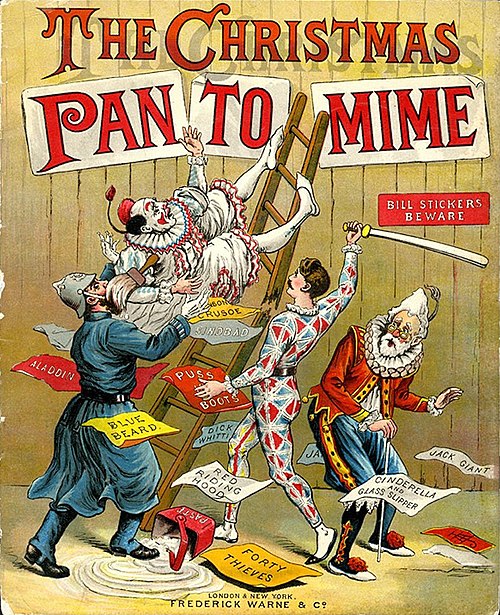
Every winter, Britain packs into theatres to boom 'He's behind you!' at a ghost, a man in an enormous frock and a girl in tights. It all began with a Georgian clown.

Wales's patron saint lived on bread, herbs and water, and his national day has two emblems, the leek and the daffodil, because of a happy linguistic muddle.
The oldest known tartan in Britain was stuffed into a pot of Roman coins near Falkirk, and the kilt you picture is younger than the Union Jack.

Ten songs in about ten hours: the Beatles did most of their debut album in one February day in 1963, and Twist and Shout was the grand finale.

It began in 1947 when eight theatre companies turned up uninvited to a festival that hadn't booked them. Now it's the biggest arts party on the planet.
Wales holds a poetry contest where the winner is chased into the ceremony by a sword, a horn and a hush, and the prize is a carved oak chair.
For more than half a century, the government ran the pubs of one English city, and kept going until 1973. That is just one oddity of Britain's favourite public living room.
A Scottish tradition where grown adults hurl a tree trunk end over end, pipers battle for glory, and the monarch might be watching from the stand.
The world's biggest classical music festival began as a plan to get ordinary people into concert halls, and you can still stand for hours in the Albert Hall's arena for next to nothing.
Welsh counts in twenties, bends its first letters like putty and was kept alive by a 1588 Bible. Today it is being taught back into a new generation.


