
1828
Aged about 12, Ada designed flying machine wings


Ada Lovelace
Ada Lovelace wrote what's often called the first computer program in 1843, a century before anyone built a machine that could run it. Her father was Lord Byron.
26 articles
Ada Lovelace wrote what's often called the first computer program in 1843, a century before anyone built a machine that could run it. Her father was Lord Byron.
The best-selling novelist of all time vanished for eleven days in 1926, and checked into a Harrogate hotel under her husband's mistress's surname.

Alan Turing once chained his tea mug to a radiator at Bletchley Park, and cracked codes that shortened the Second World War. His story is odder, and sadder, than the legend.

Alexander Fleming, the Scot who discovered penicillin, did it by going on holiday and leaving a messy lab bench behind. A mouldy dish changed medicine for ever.

C. S. Lewis, creator of Narnia, was born in Belfast, once taught Tolkien's pals over pints, and died the same day JFK was shot. His life was stranger than his wardrobe.
Charles Darwin once dropped out of medical school, ate his way through an odd menu of animals, and still rewrote the story of life from a quiet Kent village.

At 12, Charles Dickens pasted labels on boot-polish pots while his father sat in debtors' prison. He hid it for years, then turned it into fiction.

He named a Welsh village after a rude phrase spelled backwards, and he's on the Sgt. Pepper cover. Dylan Thomas packed a lot into 39 years.

She never married, wore a face of white lead, and ruled for 44 years. Elizabeth I turned being a woman alone on the throne into England's greatest brand.

She liked to say she was born on Bastille Day, then spent her life storming the establishment from a Manchester drawing room.

Florence Nightingale is remembered as a lamp-carrying angel, but her sharpest weapon was a pie chart, and she kept a pet owl in her pocket.

A Belfast teenager was so homesick he fled Manchester after two days, then returned to become European Footballer of the Year and the first superstar of British football.

He was a lean, athletic prince who could outjoust anyone in Europe. By the end he needed a mechanical chair to get upstairs, and had rewritten England's religion.

Isaac Newton once ran the Royal Mint like a detective, hunting counterfeiters in disguise, and sent at least one to the gallows.

He once swallowed a coin during a magic trick and had to be hung upside down to cough it up. Then he went on to redraw the map of Britain.

Jane Austen never put her name on a novel in her lifetime, wrote at a tiny table in a busy sitting room, and now stares out from the £10 note.

She was Queen of Scotland at six days old, Queen of France at sixteen, and spent nineteen years as Elizabeth I's prisoner, writing in stitches what she couldn't say aloud.

He was a Welsh squire trained in law who ended up proclaimed Prince of Wales, and then he simply vanished. Nobody knows where Owain Glyndŵr died.
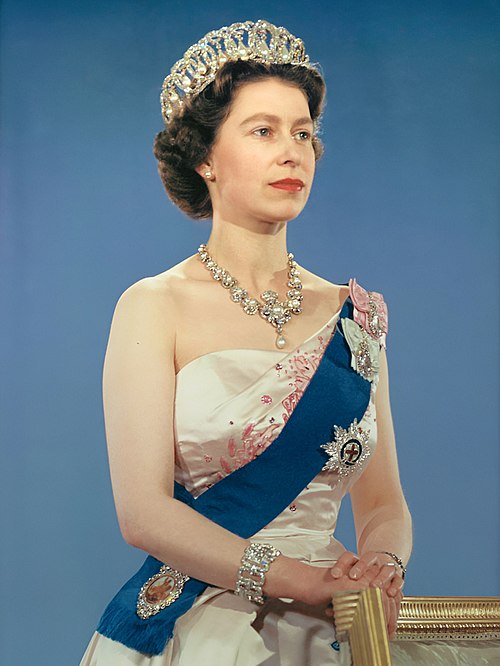
She learned to repair army trucks at 18, never went to school, and became the only British monarch to reign for 70 years.

Britain's longest-reigning monarch of her age survived at least seven attempts on her life, popularised the white wedding dress and never quite stopped grieving.

Roald Dahl crashed a fighter plane in the Libyan desert, helped design a medical valve and was buried with a power saw and a bottle of burgundy.

He was days from sailing to Jamaica when his first book sold out and changed his mind. Burns went on to write the song the world sings at midnight on New Year's Eve.
Stephen Hawking was told he had two years to live at 21. He went on to live for 55 more, rewrote black hole physics and starred in The Simpsons.

Shakespeare spelled his own name several ways, left his wife his 'second-best bed', and still gave English some of its most quoted phrases.


